
Designing Florals for Architecture and Interiors
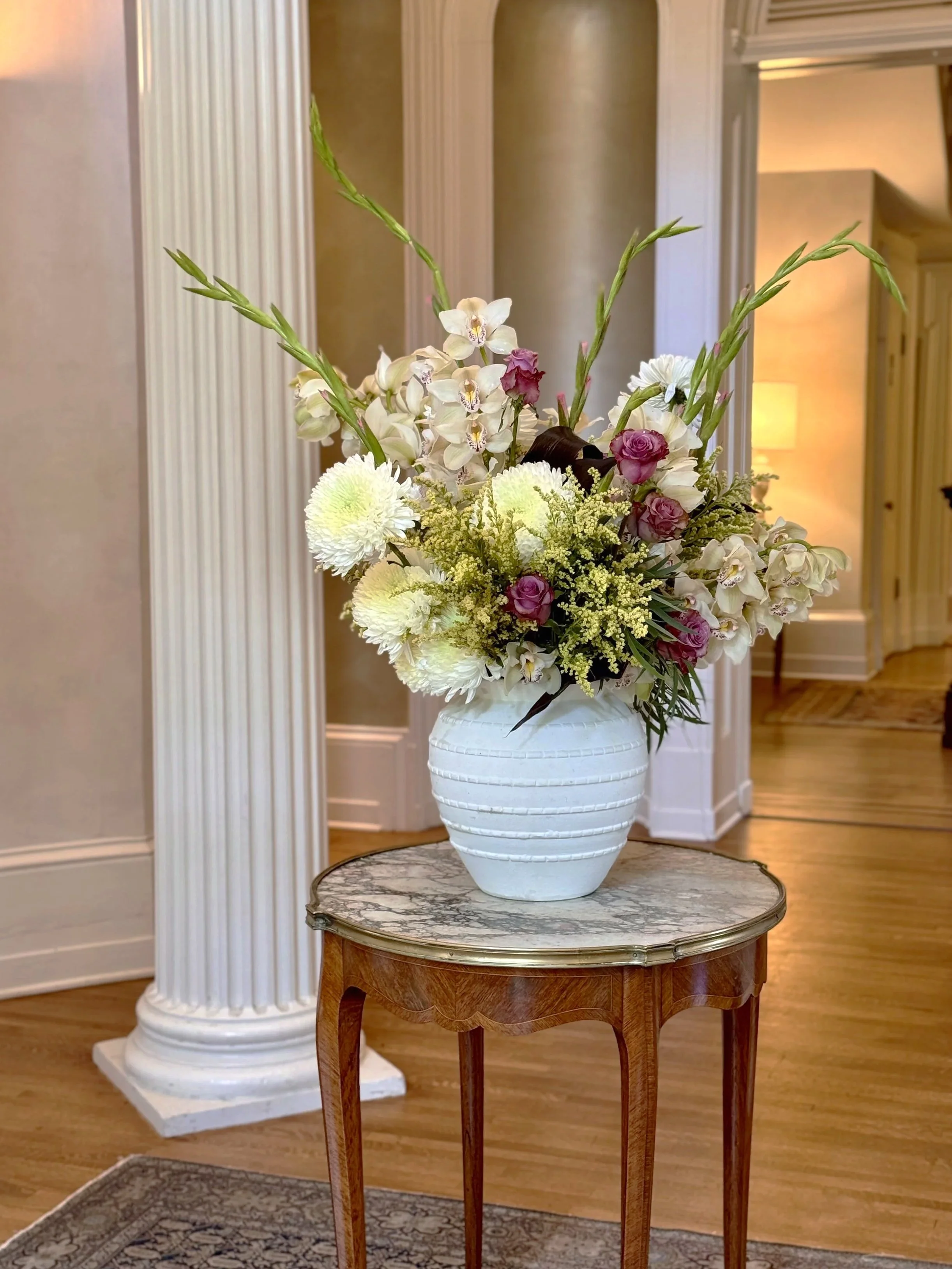
The most compelling floral design does not compete with architecture.
It responds to it.
At Lavish Leaf, interiors and florals are approached as part of the same visual conversation. Every environment carries its own language — through materiality, scale, light, proportion, texture, and mood — and florals should feel integrated into that narrative rather than separate from it.
This perspective has deeply shaped our work across hospitality, corporate, editorial, and residential spaces.
A modern interior may call for restraint and sculptural line.
A historic environment may invite softness and layered texture.
A minimalist space may benefit from asymmetry and movement.
A richly detailed room may require quiet balance.
The process begins with observation.
We study how natural light moves through a room. How guests enter and circulate. Where the eye naturally rests. Which architectural details deserve emphasis rather than distraction.
Flowers then become an extension of the environment itself.
Sometimes this means compositions with strong architectural branches and preserved negative space. Other times it means layered florals designed to soften sharp structural lines or introduce warmth into highly contemporary interiors.
Our background in interior design continues to influence this philosophy profoundly. We are consistently inspired by the relationship between florals, furniture, texture, art, and spatial composition.
The most successful floral environments rarely feel accidental.
They feel resolved.
This is particularly important within hospitality and corporate spaces where atmosphere directly shapes experience. Florals have the ability to influence how a guest feels entering a lobby, how a client perceives a brand, or how warmth is introduced into large-scale commercial interiors.
When approached thoughtfully, floral design becomes more than a decorative element.
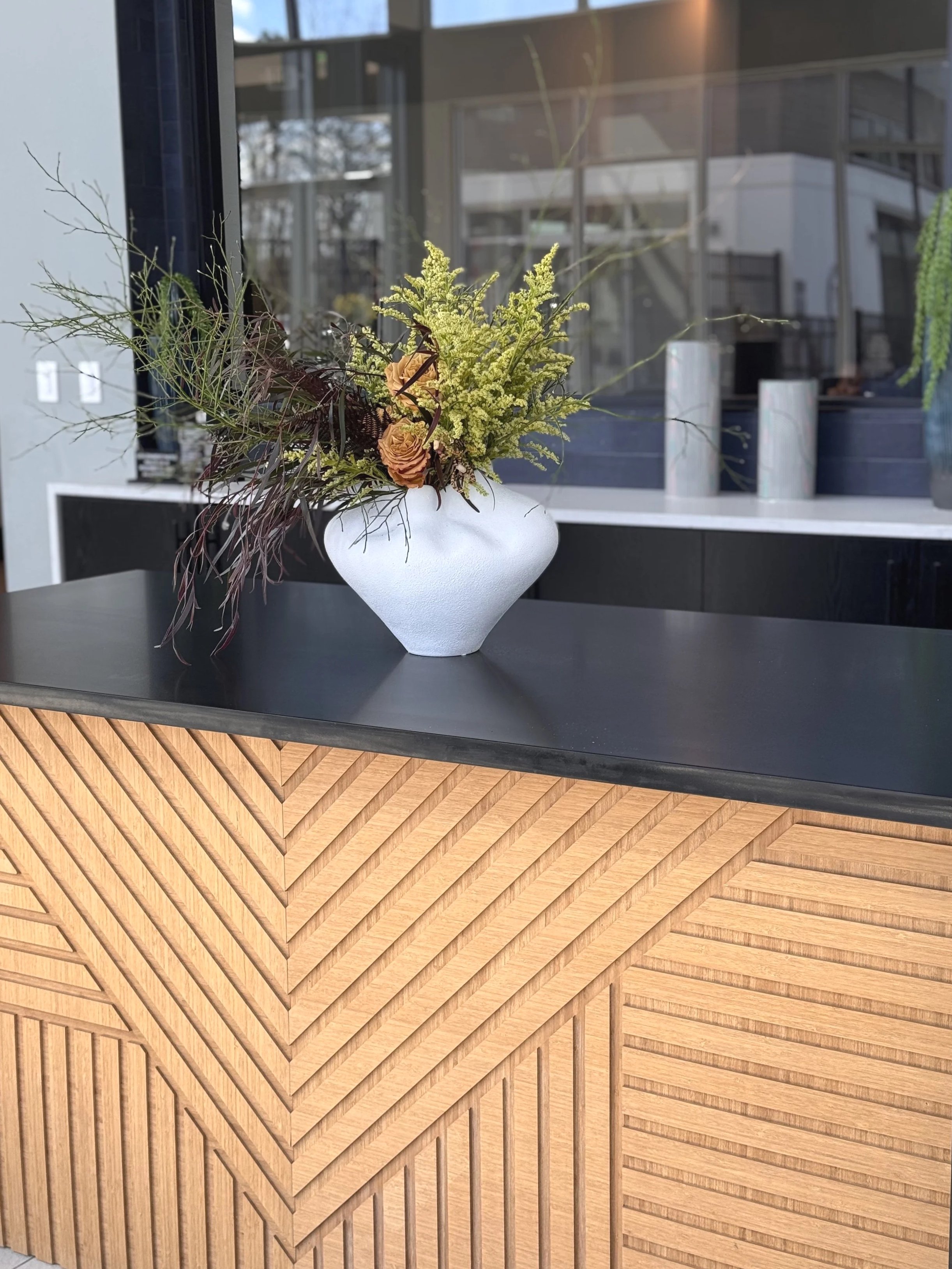
It becomes part of the architecture of experience itself.