
Architecture tells a story long before flowers ever arrive.
The proportions of a room, the way natural light moves across a floor, the warmth of wood, the coolness of stone, the softness of linen, and the rhythm of repeated materials all shape how a space is experienced. Flowers should never compete with these elements. They should belong to them.
At Lavish Leaf, we begin every project by studying the environment before selecting a single stem. We look at ceiling heights, architectural lines, surrounding textures, circulation, and the way people naturally move through the space. These observations become the foundation for every floral decision that follows.
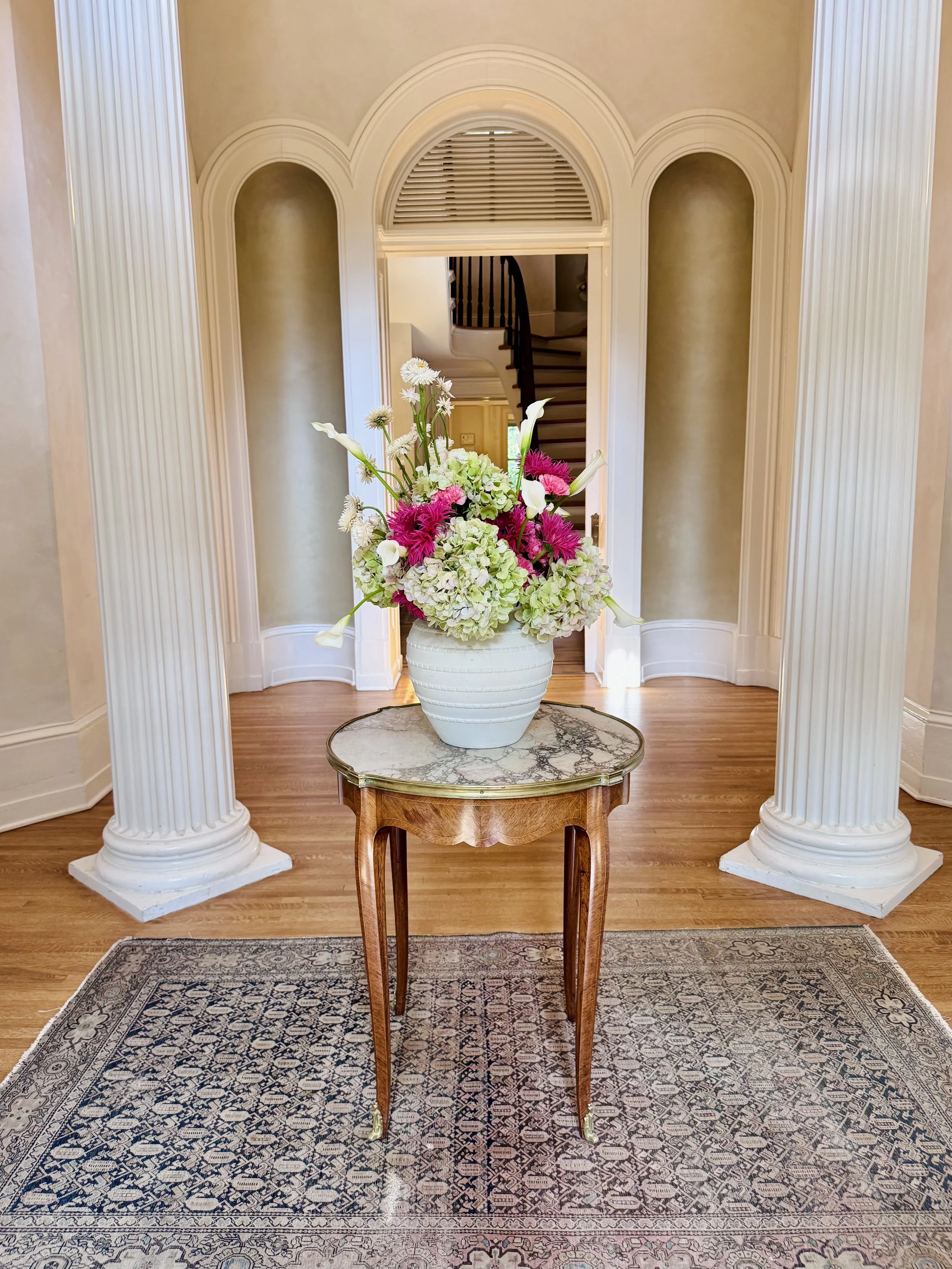
A sculptural arrangement beneath a soaring lobby ceiling requires a very different approach than flowers designed for an intimate restaurant or a quiet residential sitting room. The flowers may be equally beautiful, but their purpose is different.
Our goal is not simply to place flowers within architecture. It is to allow them to become an extension of it.
Branches may echo the vertical lines of a grand entryway. Delicate movement may soften the clean geometry of a contemporary interior. Tonal palettes may quietly reflect surrounding stone, plaster, or wood, creating a sense of continuity rather than contrast.
When floral design responds to architecture instead of competing with it, the experience feels effortless. Guests rarely identify exactly why a space feels balanced or welcoming—they simply feel it.
This philosophy influences every environment we design, from boutique hotels and corporate headquarters to weddings and private residences throughout North Carolina.
Because the strongest floral design is not remembered as an object within a room.
It is remembered as part of the room itself.