
The Artistic Process Behind Our Art in Bloom Installation
For this year’s Art in Bloom at the North Carolina Museum of Art, the creative process began with studying the work of Jean Hélion and observing the relationship between shape, movement, structure, and visual rhythm within the composition.
Rather than approaching the installation as a literal floral recreation of the artwork, the goal was to create an interpretation rooted in atmosphere, planes, sculptural form, and spatial movement — allowing florals to function as an artistic response to the original piece.
The installation incorporated calla lilies, chrysanthemums, anthuriums, and carnations, each selected for their distinct form, texture, and ability to contribute to the visual language of the composition. Arranged in layered planes and directional movement, the florals were intentionally composed to echo moments of structure, abstraction, tension, and balance found within Hélion’s work.
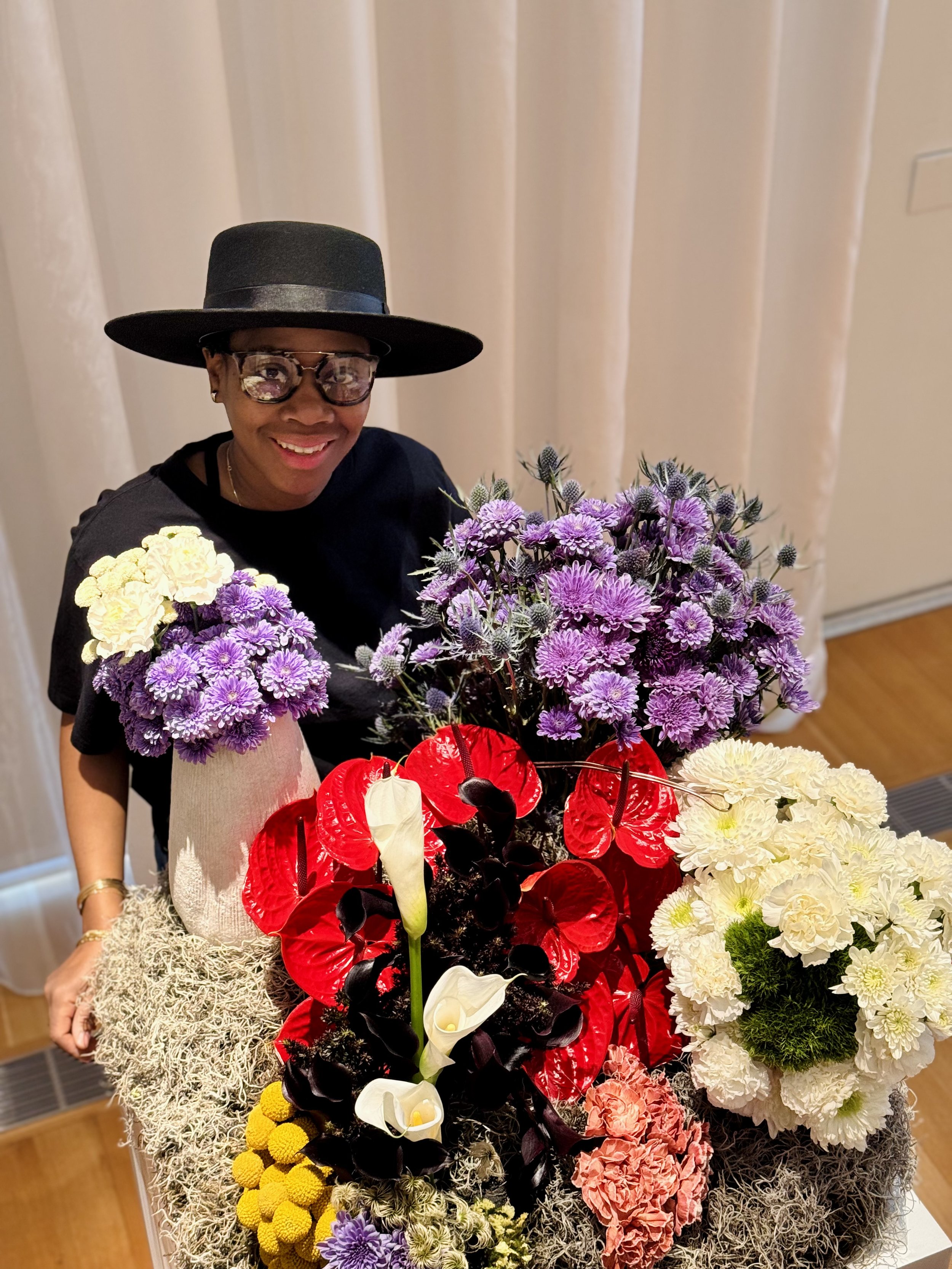
Shape became a central focus throughout the design process.
The curves of the callas, the sculptural presence of the anthuriums, and the clustered rhythm of the chrysanthemums and carnations were used to create contrast, repetition, and movement throughout the installation. Negative space was treated as intentionally as the florals themselves, allowing the composition to feel expressive yet restrained within the gallery environment.
As guests moved around the piece, the installation revealed shifting perspectives and changing moments of visual interaction — creating an experience that felt immersive rather than static.
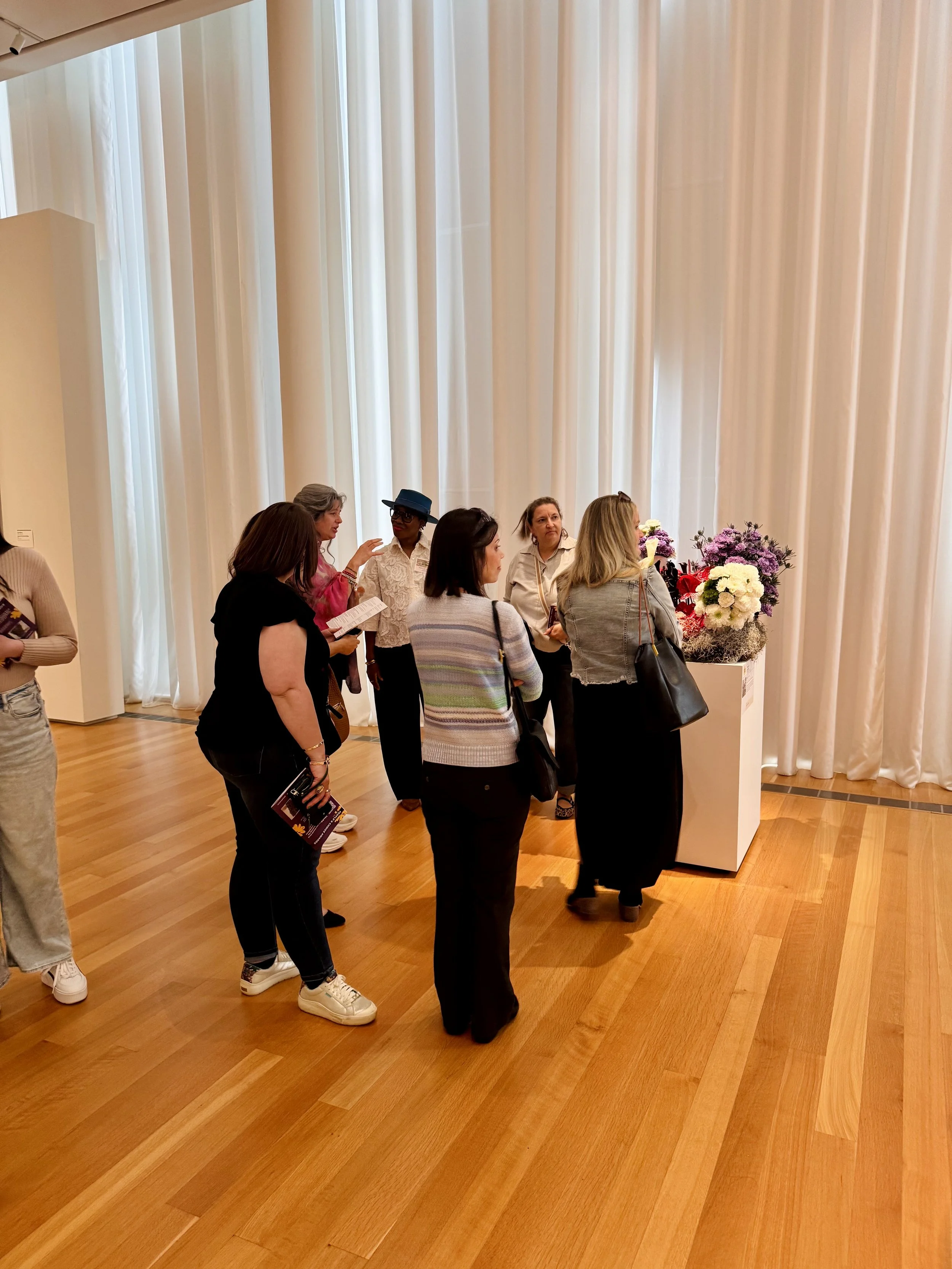
Projects like Art in Bloom continue to affirm our belief that floral design can exist far beyond decoration. Within spaces dedicated to art, architecture, and culture, florals have the ability to shape atmosphere, evoke emotion, and participate in larger conversations surrounding interpretation and experiential design.
We are deeply grateful to the North Carolina Museum of Art for the opportunity to participate in such an inspiring exhibition and to contribute to the ongoing dialogue between florals and fine art.